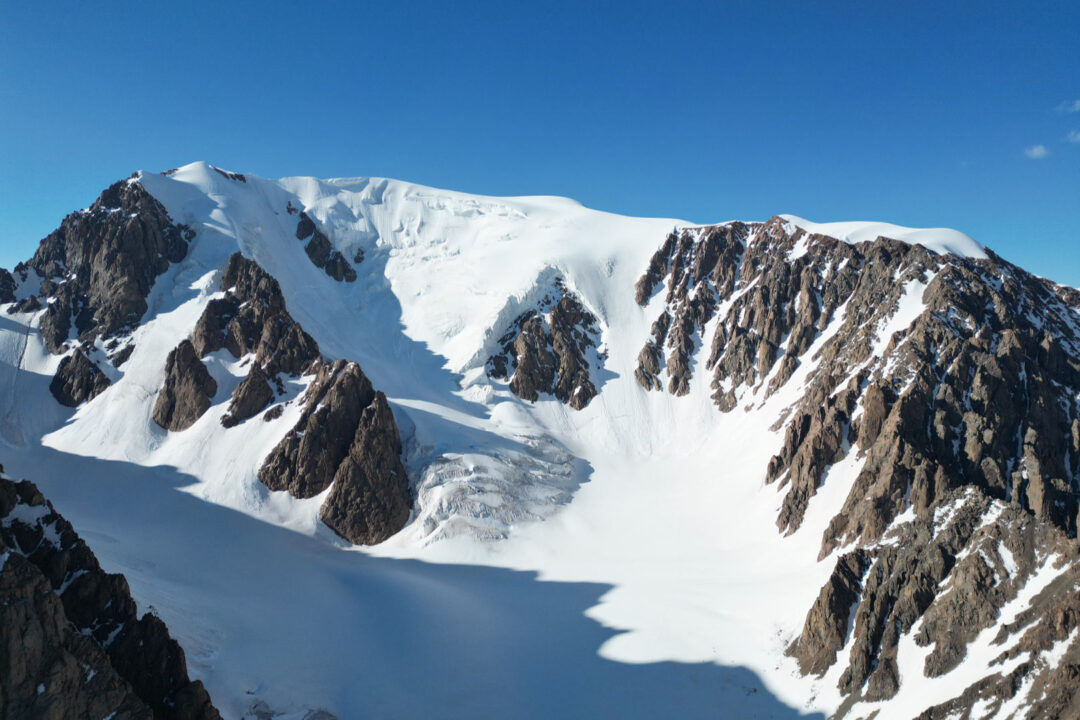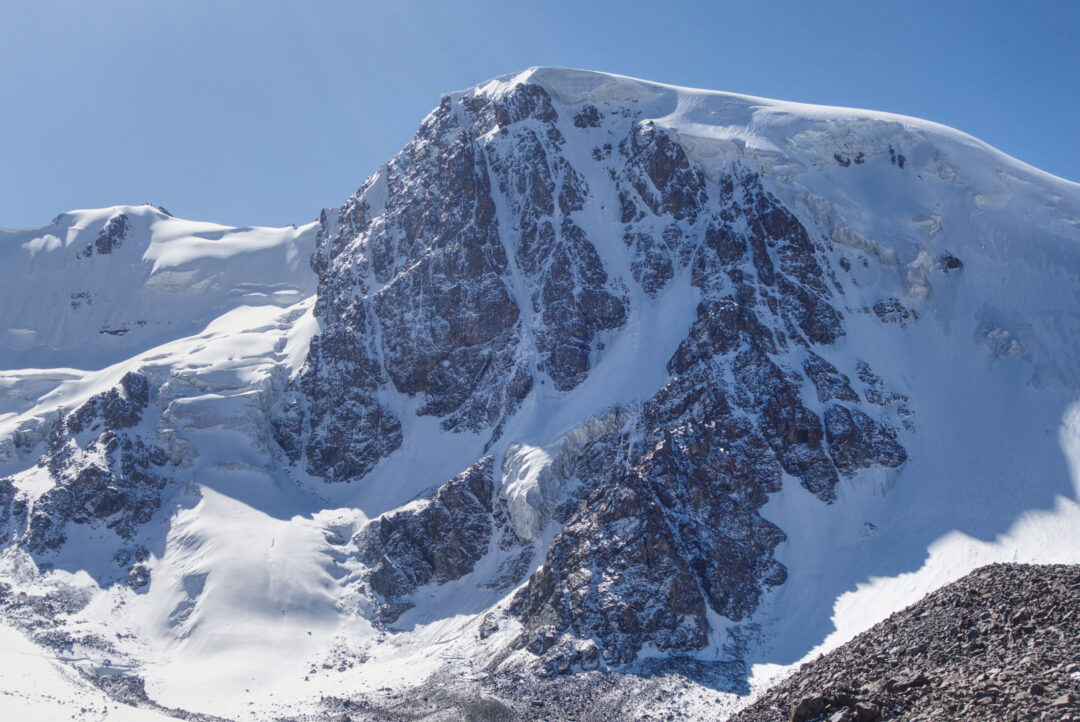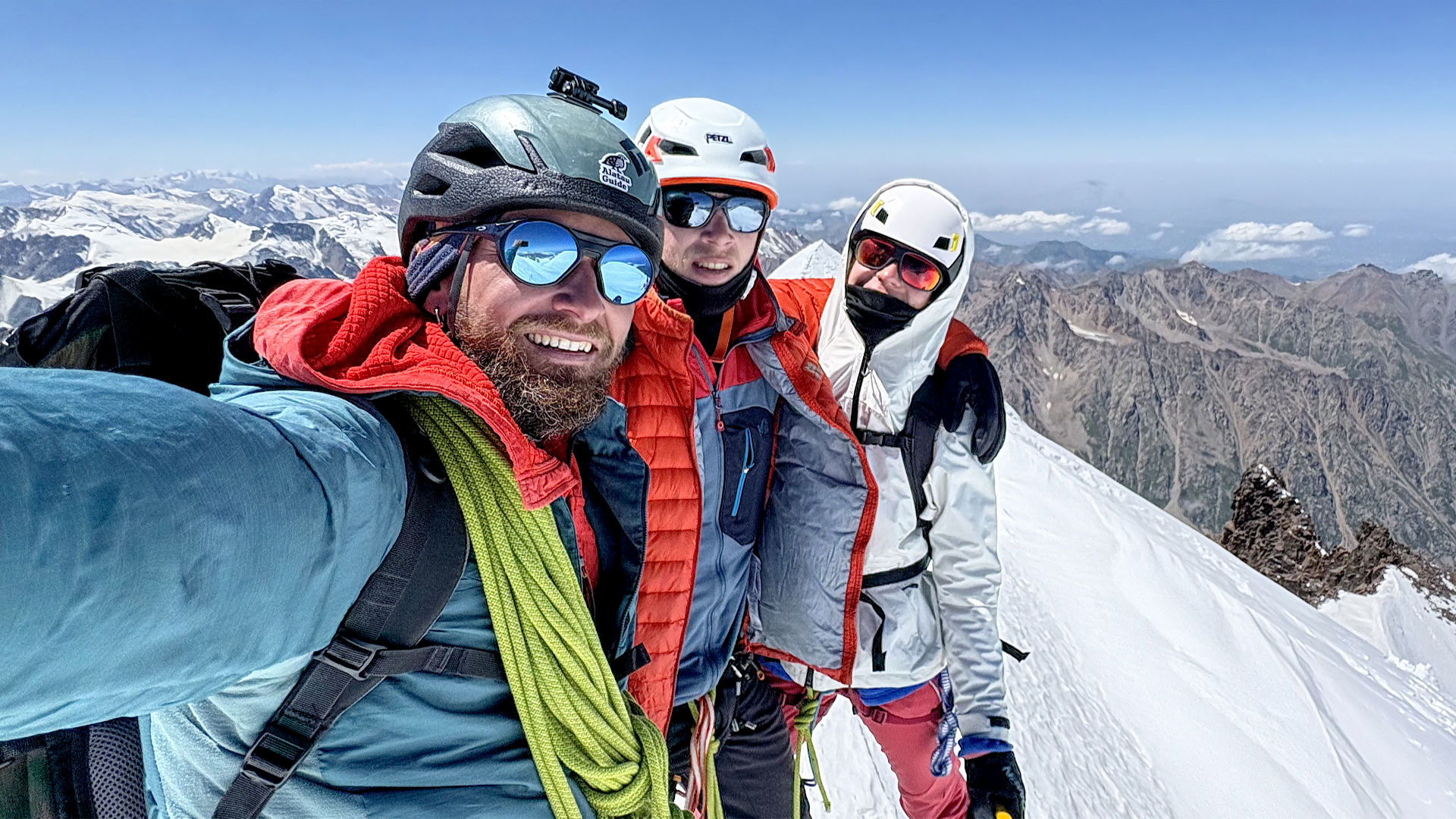
In July 2026, an Alatau Guide expedition climbed Mt Talgar via the North Ridge. The team consisted of guide Kirill Belotserkovskiy and two strong Swiss climbers: David and Gioia. The route is long and demanding, so it sees very few ascents.
The last time I approached Mt. Talgar through the Right Talgar valley was in 2024, with a strong group I knew well. I expertly avoided every stretch of road and every decent trail, which made the fitness of the team especially important. This year I had done my homework much better: found all the trails and shortcuts and built a track on my phone. The approach was much easier.
By noon we reached the source of the Right Talgar River. It comes roaring straight out of an ancient moraine. That was the minimum plan for the day. We still had plenty of time, so we had a snack and continued towards Severny Pass (3,313 m, ungraded).
A cloud was waiting for us on the pass. I had wanted to climb the neighbouring scree summit, Krugozor (3,442 m), but with it hidden in cloud there was little point: there would be no krugozor—no view—from Krugozor. We descended a gentle grassy slope to the lake, accompanied by whistling marmots, and took our time pitching our one and only tent.
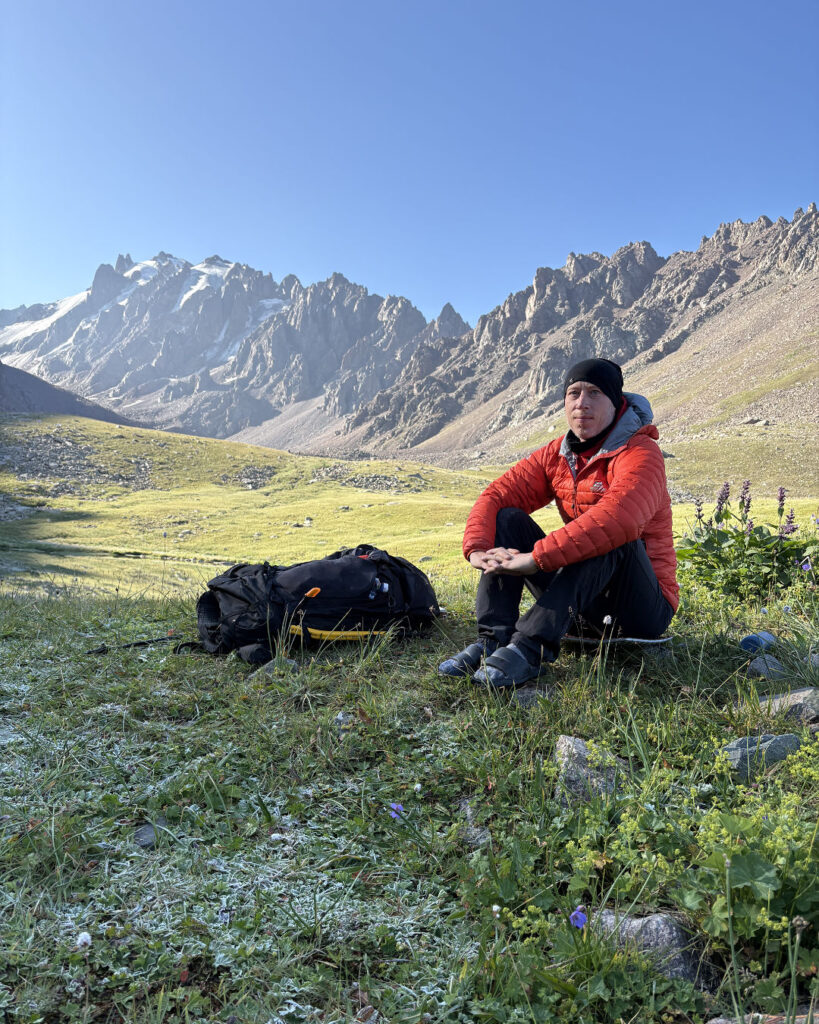
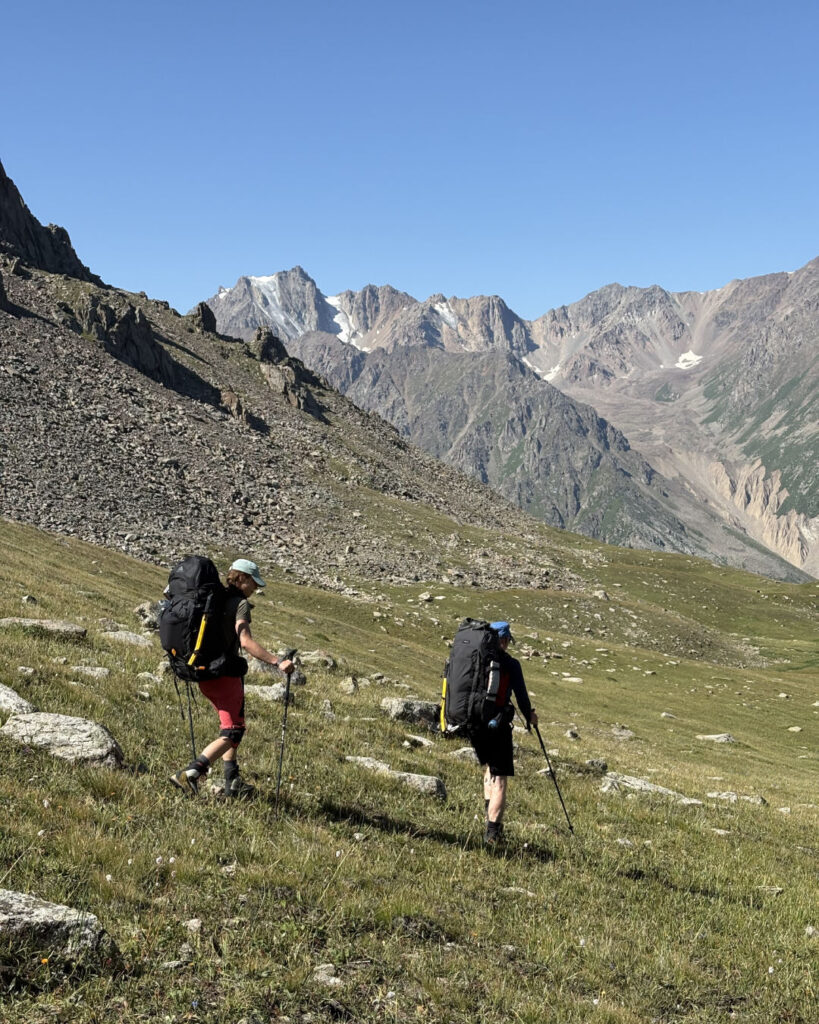
We woke up next morning and had breakfast without any rush. The plan for the day was to reach the basin of the neighbouring Ozyorny Glacier. To get there, we descended towards Middle Talgar, crossed a ridge, then went a little farther down a steep grassy slope to the moraine. Sometimes we followed the moraine ridge, sometimes stayed just to the left of it, and eventually reached the foot of the glacier.
We found a good place for the tent below Kyzyltyuz Pass (3,925 m, 1B), which lies on the ridge connecting Sportivnaya (4,096 m) with the main ridge of Ile Alatau Range.
I checked the snow. There were crevasses, but small and visible, so it was safe enough to walk around the tent. I left the guys levelling the tent platform and went off to build a toilet, so that everyone would have a chance to enjoy some privacy.
It had been a long day, but my climbers did not want a rest day. Let’s climb the mountain tomorrow, they said.
Evening was coming. I stood on the glacier and stared around. The scree on the pass did not look nearly as bad as it later turned out to be.
About a kilometre and a half farther down, the Karatau buttress (4,227 m) rises out of the glacier. From close up, the rock looked extremely loose. Opposite us was the Metallurg buttress (4,600 m, 4B), whose loose rock was also the stuff of legend. Directly below it was Taverntau Pass (4,110 m, 2A), leading into the upper reaches of the Right Talgar valley.
From Metallurg, the main ridge runs towards us, with Kopr Peak (4,612 m) rising from it. Sportivnaya stood to our left, constantly dropping little pieces of itself.
We woke up at two and started at three. The climb to the pass was harder than I had expected. Every rock, including the large ones, seemed determined to roll downhill.
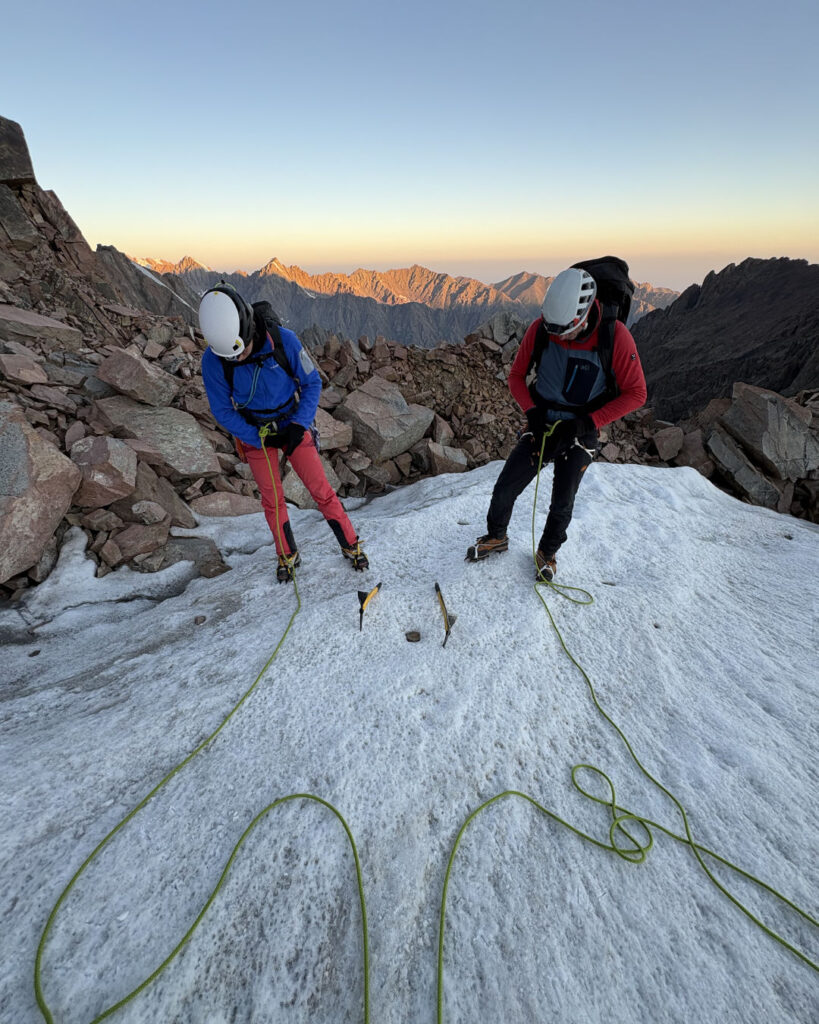
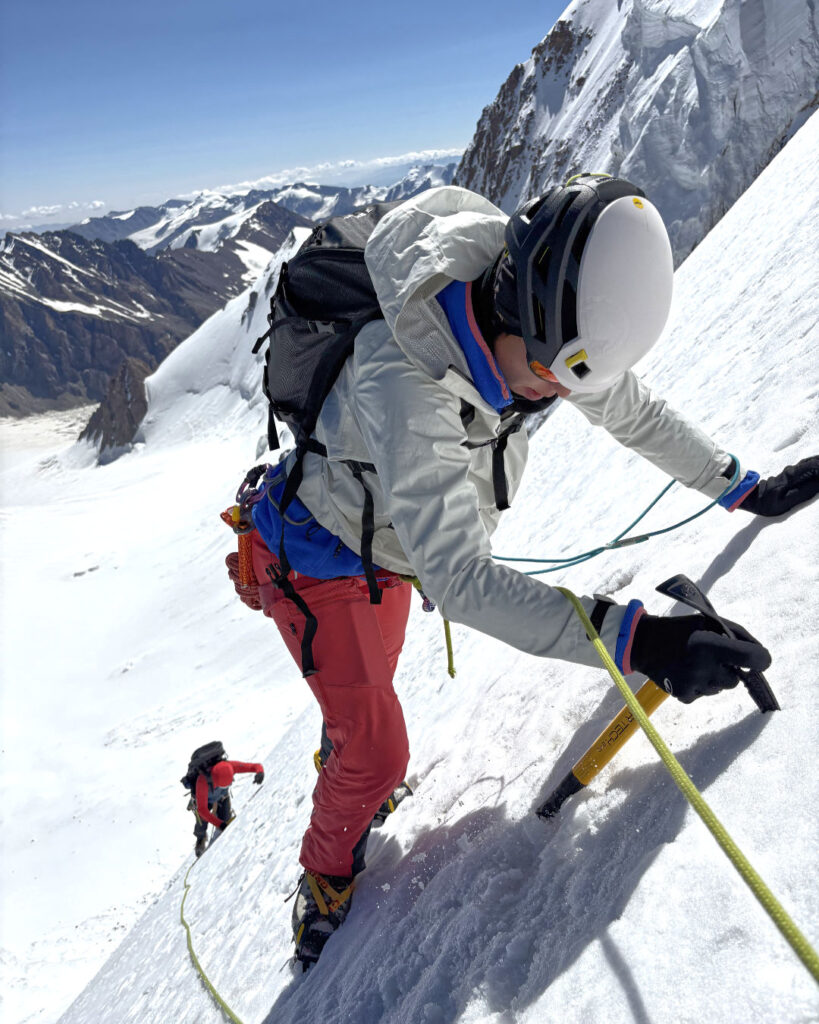
We reached the ridge in the predawn light, roped up and started climbing. The rock was easy but, as you may have guessed by now, very loose. On the way to the first ice, we passed several old tent platforms—memories of those who had climbed here long before us.
The ice was not steep, but I did not want us moving simultaneously. I climbed thirty metres, then belayed the guys up. We climbed about ten pit hes like this before reaching the main ridge leading towards the summit. There we stopped for a rest there. Reaching the ridge had taken a respectable amount of effort, added neatly on top of the fatigue from the previous two days of approach.
From there, the ridge leads towards the quasi-summit of Yintau (4,800 m). It is really a shoulder with several small gendarmes sticking out of it. According to the old account, this was where Vasily Semyonovsky reached in 1930, while exploring our mountains with Grigory Beloglazov.
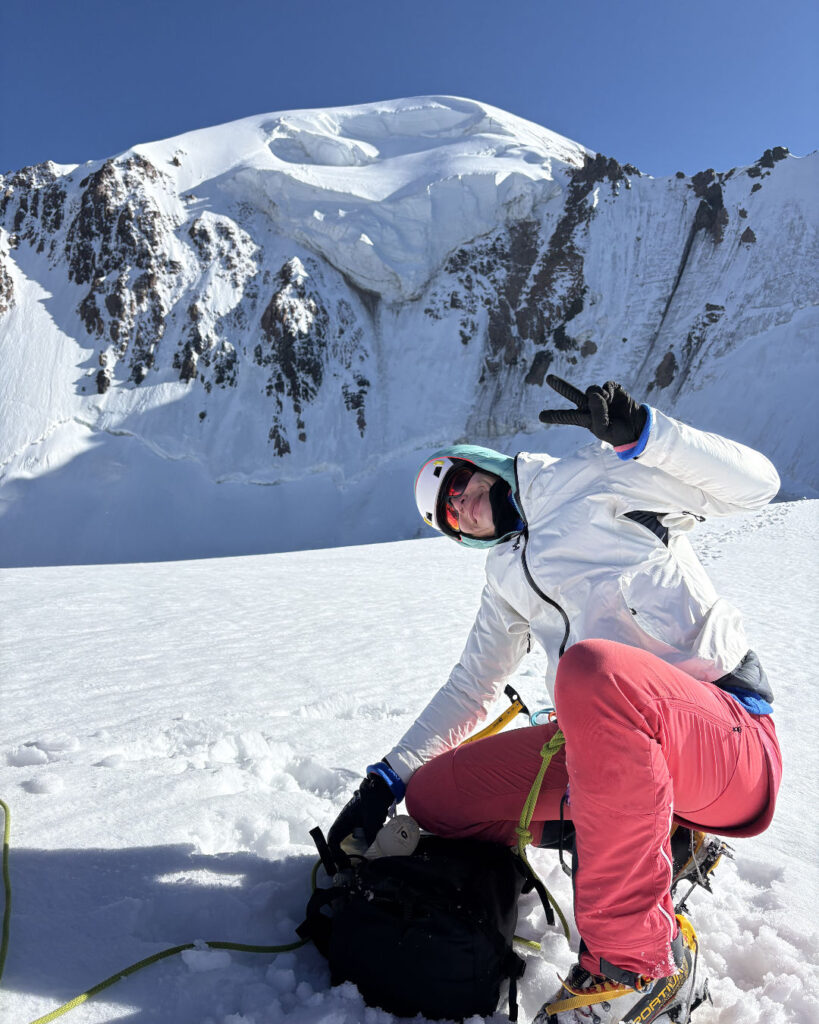
While we rested, I studied the ice slope leading to Yintau. It faces east, so it catches the sun early. This meant that the rocks up there had already warmed up. A stone rolled down from one of the gendarmes.
Oh well. At least there was nothing hanging directly above our line. From where the snow has ended, I started bringing the guys up on belay. A few pitches later, we reached the shoulder.
This was where my guests began to have doubts. Is it hard from here? Will we make it in time? Yes, it is hard. Yes, we will.
We crossed a couple of gendarmes, followed a short ice ridge and found ourselves below the large seracs hanging from the North Summit. I could see from their faces that the fun was over. From now on, we were moving on willpower and my words of encouragement.
The first pitch had a little ice, followed by zigzags around snow-filled crevasses. The second was just steep snow. We were now on the North Summit dome, and from there we could walk.
The North Summit was very close, but we decided to pass it and continue to the Main Summit. On the saddle between the two summits, David said:
“I’m not going any farther.”
“Hey, it’s only ten more minutes. Let’s finish it, okay?”
And so we did.
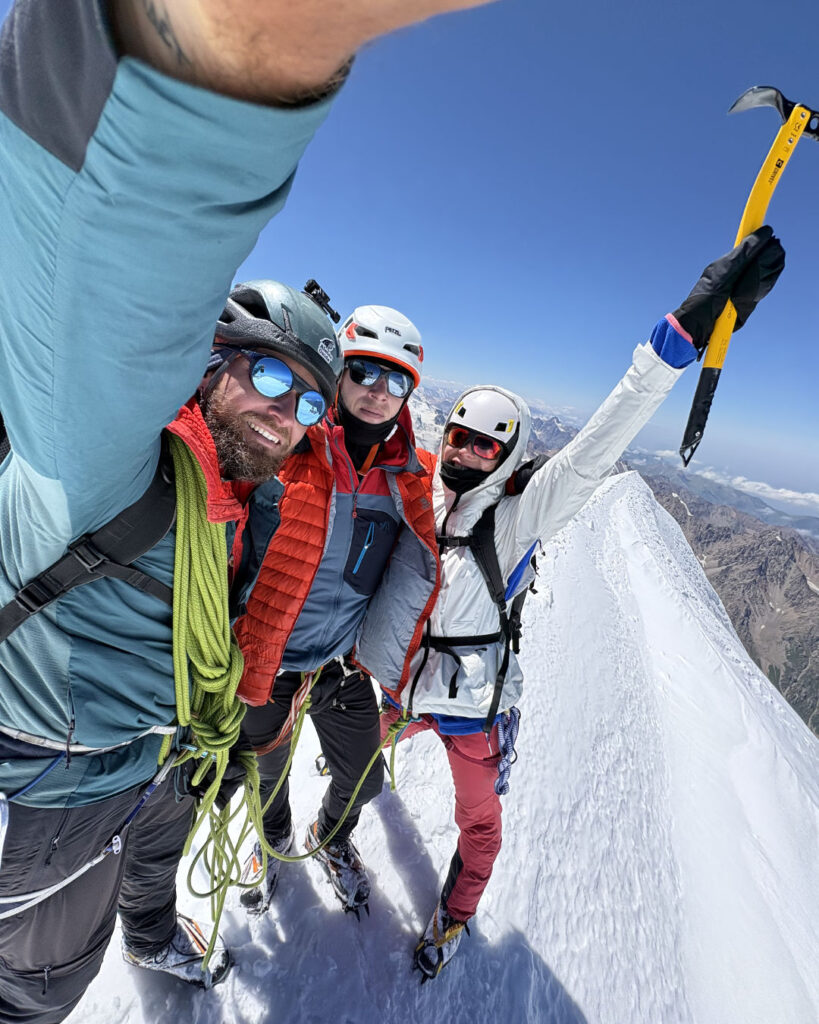
Noon, 30 July. The weather was magnificent, though clouds were building over the Terskey Ala-Too far to the south. We did not get to see Khan Tengri or Pobeda—the tallest mountains of the whole Tyan-Shan range— that day.
To fix the first rappel from the North Summit, I had to search for something to anchor it to. There was so much snow that digging down to decent ice was impossible. Burying an ice axe did not work either, because I kept hitting layers of hard ice crust inside the snow.
I spent a long time digging around, but eventually found a couple of patches of more reliable ice. I made a V-thread, backed it up with another one, and down we went.
After that, the V-threads went in without trouble, and the rock gendarmes were almost child’s play.
We followed the main ridge to Korzhenevsky Pass (4,500 m, 3A). There are no rocks above the ice there, so no stray stone can come flying down at you while you rappel.
By then, we had developed a good rhythm. The guys had divided the jobs between them and everyone knew what to do, so there were no unnecessary stops. We made six or seven rappels to the bergschrund, then descended mostly on foot to the glacier.
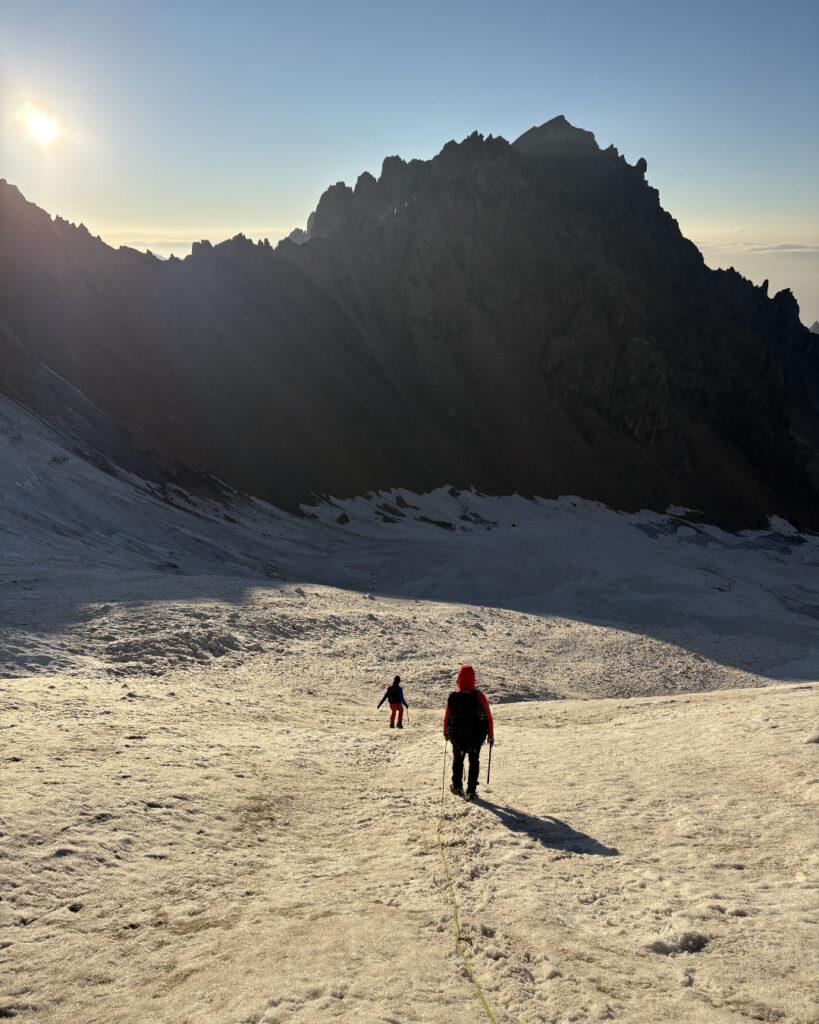
The previous afternoon, the guys had been discussing how, after the climb, we would sleep for a couple of hours (!), pack up and walk all the way back to the lake below Severny Pass.
Now, while I was making dinner, David lay down “for five minutes.” Naturally, he woke up the next morning.
Gioia and I had dinner, then climbed into the tent with all the grace of ducks.
Talgar is not what you would call an easy mountain to begin with. Climbing it from Ozyorny Glacier makes it even less so. The climb and descent took us sixteen hours. That does not mean we worked non-stop the whole time. We stopped, rested and ate. But we did not waste time anywhere.
In the morning, fresh and well rested—which we were not—we started down. I thought that once we reached the lake, the guys would show some common sense and ask to stay there for the night. Instead, they showed character and continued downhill. Splendid.
We reached the Right Talgar valley in the afternoon. There are several networks of trails down there, so there is plenty to choose from.
This is one of the special qualities of trails in the nature reserve. One moment you are walking ahead of the group looking clever and prepared, smiling, knowing exactly where you are going, a blade of grass between your teeth—in short, a guide. Then you blink. Now you are buried up to your ears in wild rose bushes, quietly calling out so someone can find you, while your guests’ legs are covered in nettle bumps.
But everything passes, and so did the nettles. David and Gioia were no longer moving very fast, so I had time to eat raspberries and wild strawberries, and farther down even some wild apricots.
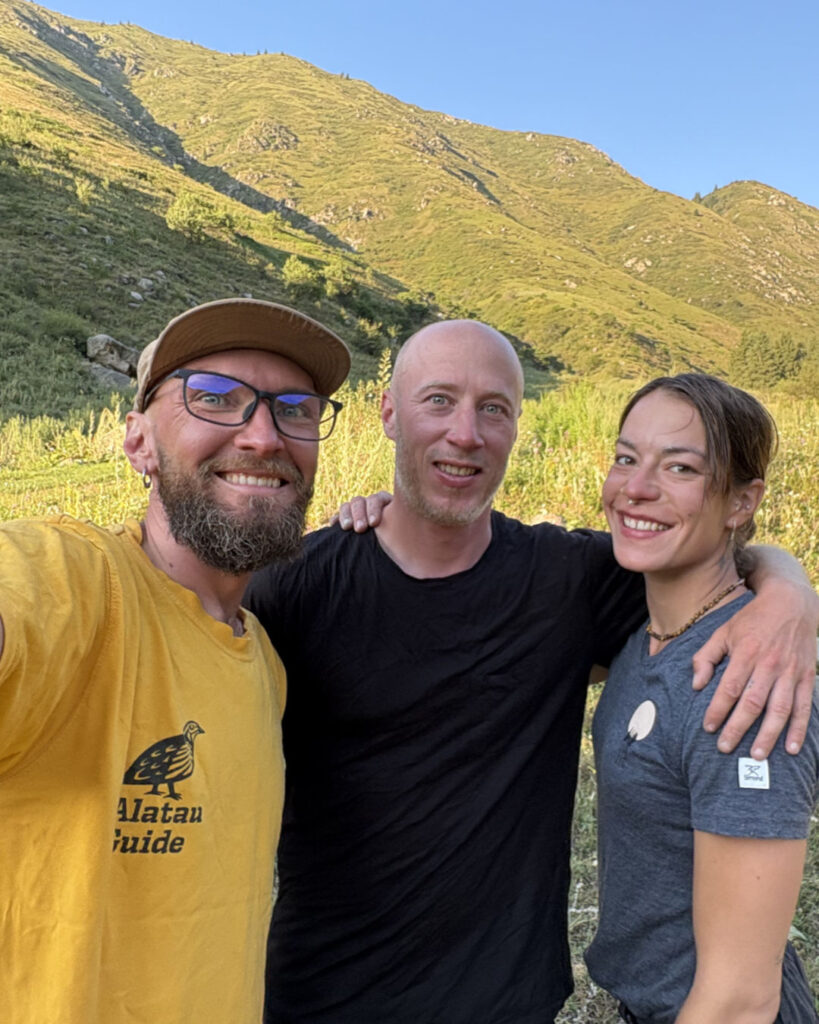
This was the fastest ascent of Talgar in my guiding career: four days and three nights. It was only possible because everything came together—the weather, the fitness of the climbers and the condition of the route.
And, well, I did a good job too. No point being modest about it.